
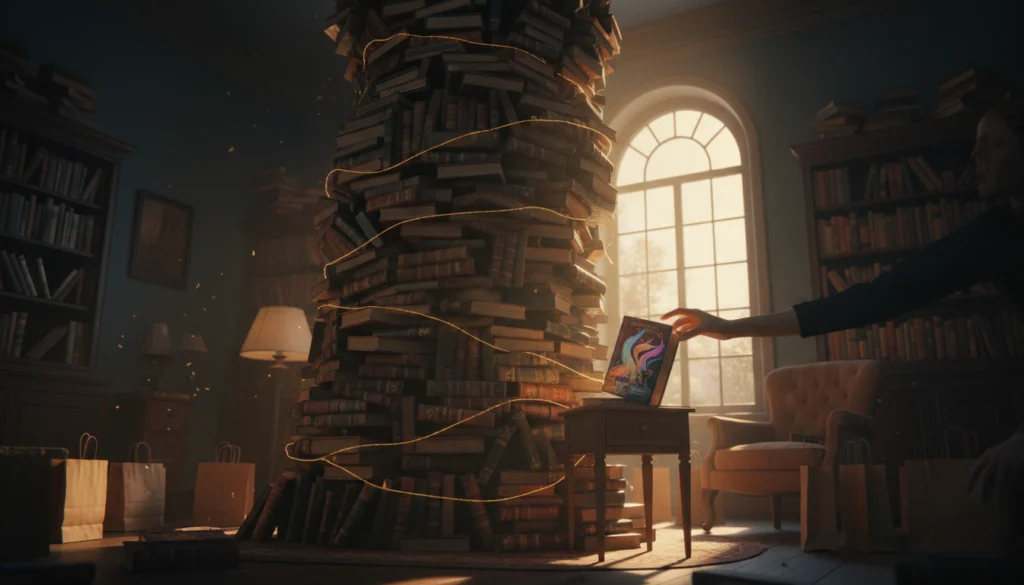
Your nightstand is hiding a secret.
You go to a bookstore. You see a beautiful cover. You read the back of the book and feel inspired.
You buy the book. You take it home. You place it on a tall stack of other books.
Then, you never open it.
If this sounds like your life, you are not alone. There is a special word for this habit. It is a Japanese word called Tsundoku.
The Magic of a New Word
The word Tsundoku sounds like a mystery, but it is very common.
It describes the act of buying books and letting them pile up without reading them.
In English, we do not have one single word for this. We usually just call it a reading list or a book pile.
But the Japanese language is very clever. It combines two different ideas into one perfect term.
Where Does the Word Come From?
This word is not new. It actually comes from the Meiji era in Japan. That was over one hundred years ago!
The word is a mix of two parts. The first part is tsunde-oku, which means to let things pile up for later.
The second part is dokusho, which means reading books.
People in Japan started using it as a pun or a joke. Over time, it became a real word that book lovers all over the world use.
The “Future Self” Problem
Why do we do this? Why do we spend money on things we don’t use?
Psychologists say it is about our identity. When we buy a book, we are buying a version of our future selves.
We imagine a person who is smart, calm, and has plenty of time to read.
Buying the book feels like a victory. It makes us feel like we have already learned something.
But then, daily life happens. We get busy. We watch Netflix or scroll through social media instead.
The Rise of Bookstagram and BookTok
In the modern world, Tsundoku is bigger than ever.
Social media platforms like Instagram and TikTok have huge communities for readers.
People show off their “book hauls.” A book haul is when someone buys a large number of books at once.
The books look beautiful on a shelf. They look aesthetic and colorful.
This makes us want to buy more books just to have a collection. The goal changes from reading to owning.
Pro Tip: Don’t feel guilty about your pile! A shelf of unread books is actually a sign of your curiosity and your desire to learn new things.
The Antilibrary Concept
Is having a pile of unread books a bad thing? Some famous thinkers say no.
A writer named Umberto Eco had a library with 30,000 books. He did not read them all.
He called this his antilibrary. He believed that unread books are more valuable than read ones.
Why? Because unread books remind us of what we do not know.
They keep us humble. They show us that the world is huge and full of new ideas.
Tsundoku vs. Bibliomania
Are these the same thing? Not exactly.
Bibliomania is the obsession with collecting books. A person with bibliomania might care about the value or the rarity of the book.
Tsundoku is more about the intention to read.
If you have Tsundoku, you really want to read the book! You just haven’t started yet.
It is a hopeful habit, not a greedy one.
How to Manage Your Pile
If your stack of books is becoming a mountain, here are some easy tips:
- The One-In, One-Out Rule: Do not buy a new book until you finish one you already own.
- Use a Timer: Read for just 15 minutes a day. This helps you make progress without feeling overwhelmed.
- Library Visits: Try borrowing books instead of buying them. It is free and there is a deadline to return them!
- Digital Samples: Read the first chapter of an e-book before you buy the physical copy.
Common Phrases for Book Lovers
If you want to talk about books in English, here are some useful expressions:
- A page-turner: A book that is so exciting you read it very fast.
- To be a bookworm: To be a person who loves reading very much.
- To crack open a book: To start reading a book for the first time.
- Biting off more than you can chew: Buying too many books at once!
Embrace the Stack
At the end of the day, Tsundoku is a sign of a creative mind.
It shows that you are interested in the world. It shows that you have many hobbies and goals.
Your books are waiting for you. They don’t mind the dust.
They will be there when you are ready to dive in.
So, the next time you see a “to-be-read” pile, don’t feel stressed. Feel lucky that you have so many adventures waiting for you.
Frequently Asked Questions
What is the basic meaning of Tsundoku?
The word refers to the habit of buying books and letting them pile up at home without reading them. It comes from Japan and is a mix of terms for “stacking things” and “reading.”
Is Tsundoku a bad habit?
Most people consider it a positive or neutral habit. It shows a love for learning and a curiosity about different topics, even if you don’t have time to finish every book immediately.
How is Tsundoku different from collecting?
The main difference is intent. A collector might buy a book to keep it perfect on a shelf. Someone with Tsundoku buys a book because they plan to read it, even if the pile grows too fast.
Why is the word Tsundoku popular in English?
It is popular because English does not have a specific word for this feeling. It is a loanword that helps book lovers describe a very common and funny experience.
Can I use Tsundoku for digital books?
Yes! While the word originally described physical books, many people now use it for their Kindle libraries or digital “to-read” lists on apps like Goodreads.
How many unread books are on your shelf right now? Tell us the number in the comments!